DESERT QUAD BIKING DUBAI Book Now
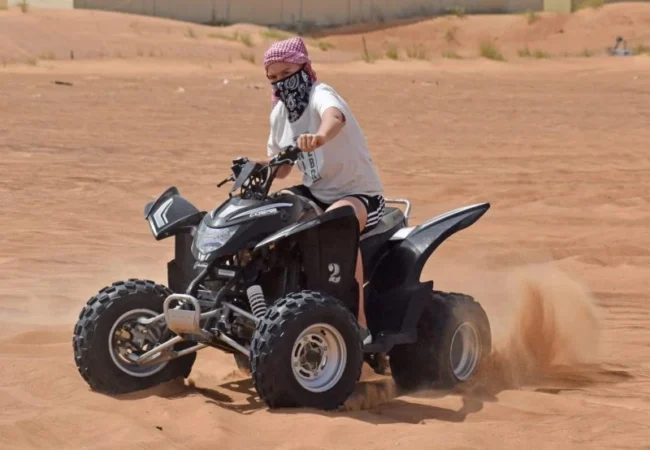
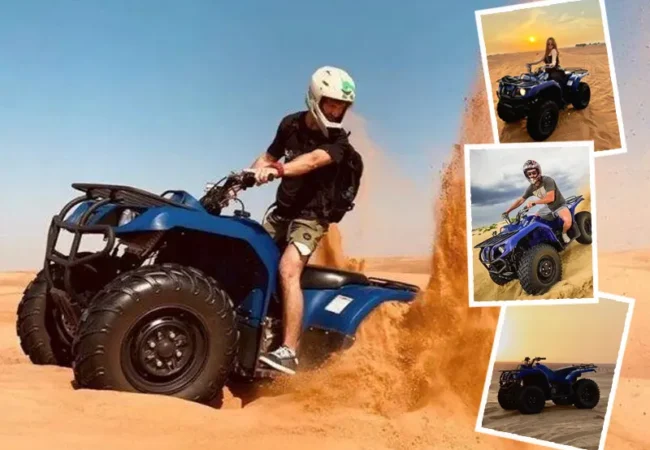
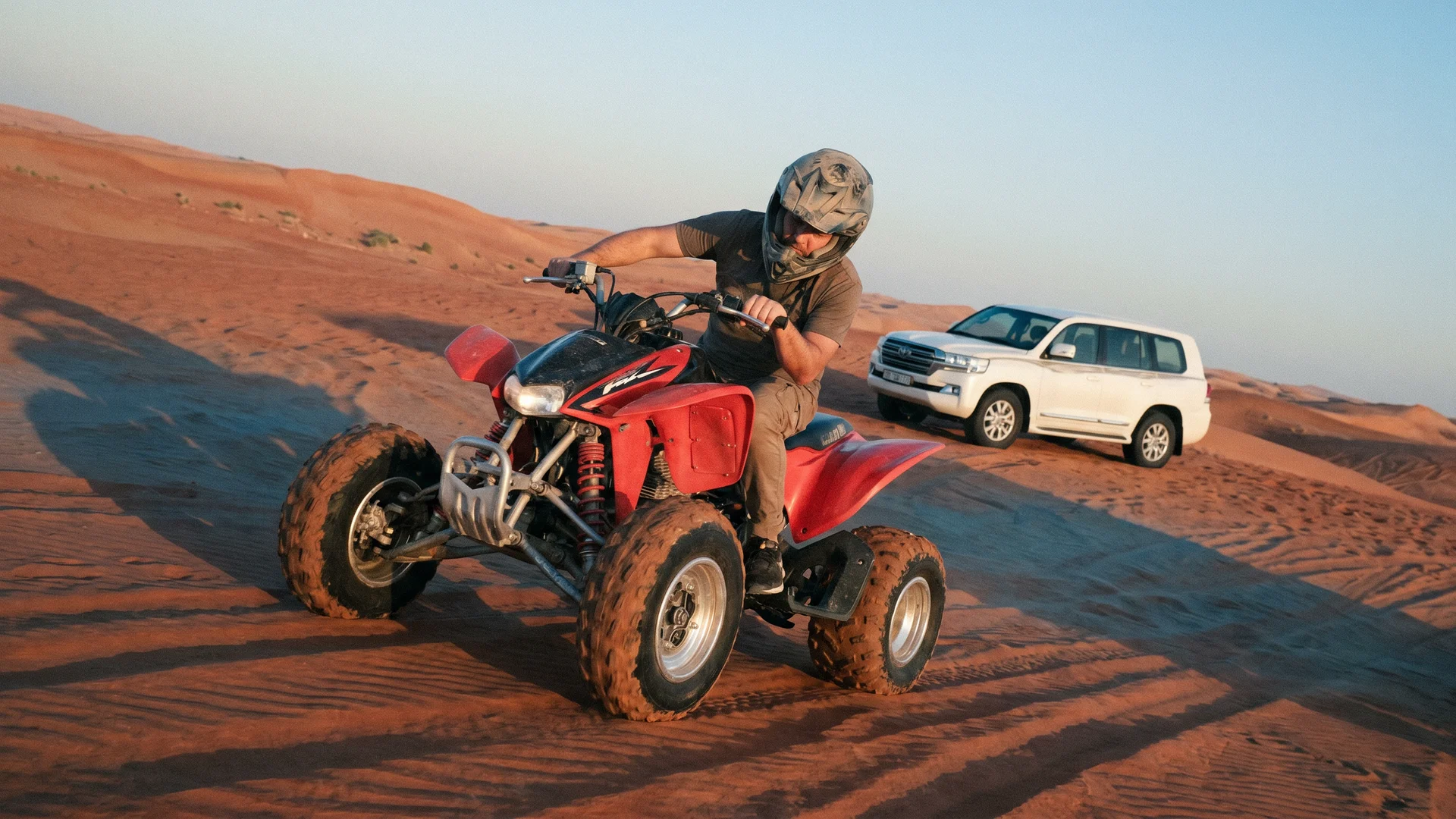
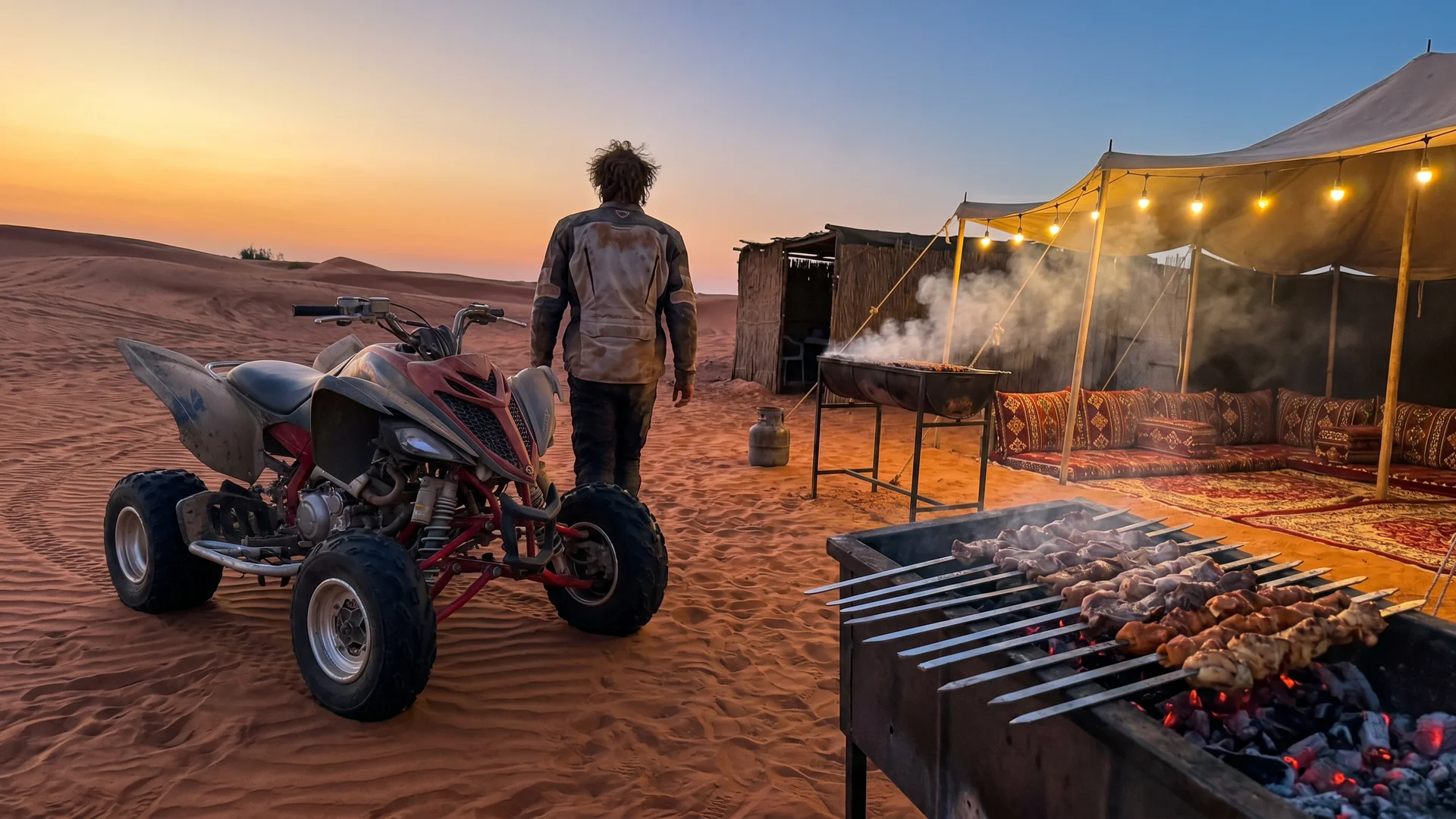
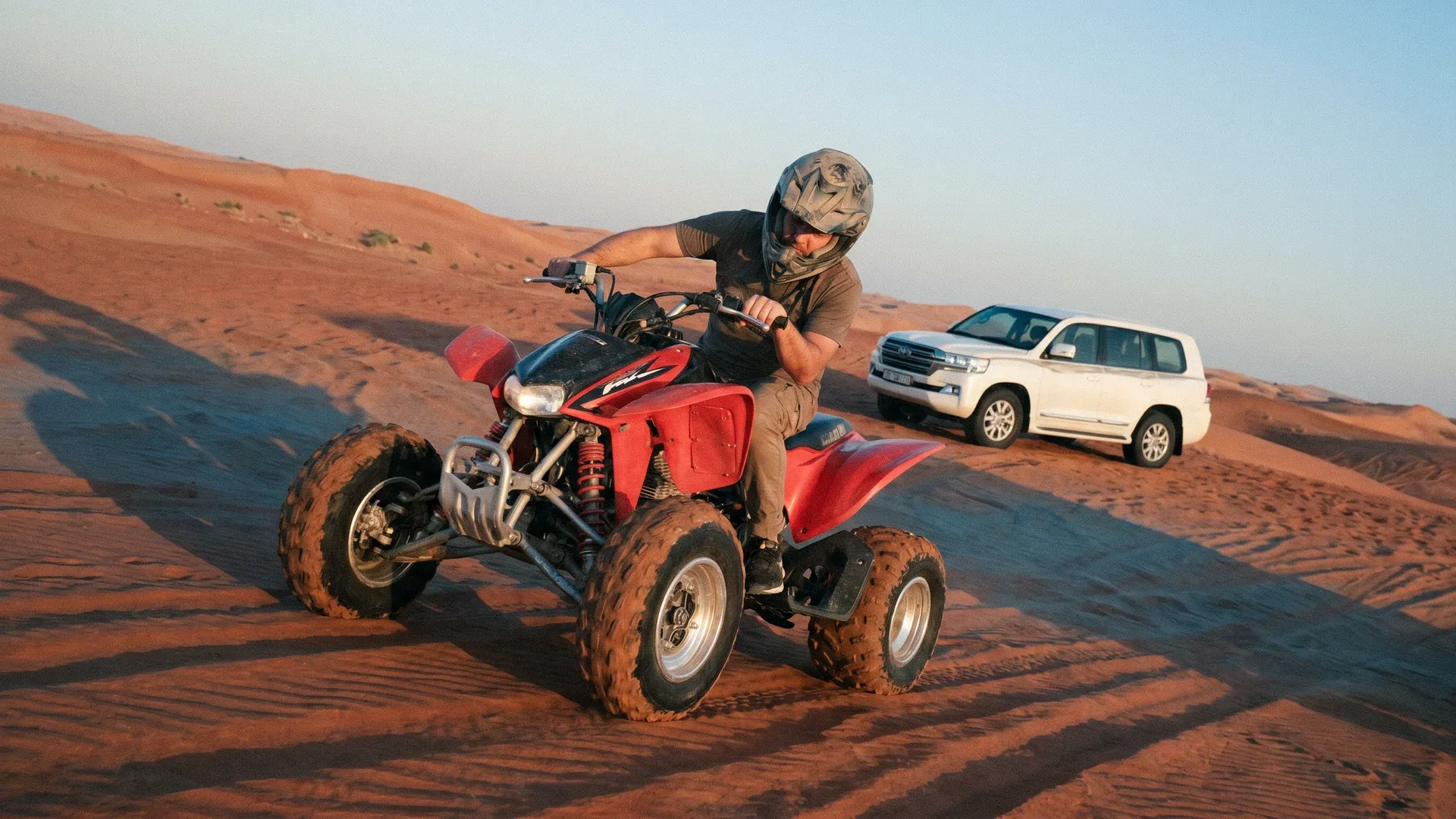
Rider on a blue Yamaha Raptor quad bike throwing sand on the Al Lahbab red dunes near Dubai
Al Lahbab red dunes · 45 min from Downtown Dubai

Desert Quad Biking DubaiThe terrain sets the route, not a fixed track

Every dune at Al Lahbab holds the sand a little differently — a firmer crust after a cool night, a looser face once the afternoon heat sets in, a ridge line reshaped by whatever wind blew through that week. A guide reads that ground before you do and sets the line accordingly, on your own Yamaha rather than a shared seat in someone else's 4x4. The fleet runs eight machines deep, from a supervised 90cc for younger riders up to the Raptor 700cc for whoever already knows what they are doing.

AED 150 kids 90cc · adults from AED 200 · helmet, water and guide included
  • DTCM-licensed operator
  • 35,000+ riders since 2020
  • One rider per quad
  • Kids track from age 9

The terrain, in short

Al Lahbab's dune terrain is the whole point here, a firm 45-minute run southeast of Downtown, and how the sand is holding on a given day shapes the actual route more than any fixed loop does. Adults pay from AED 200 for the 220cc up to AED 795 for the Raptor 700cc, though the 400cc at AED 250 is where most riders end up settling, for its extra torque on a loose climb. A supervised 90cc loop covers riders aged nine to twelve for AED 150. Every booking already folds in a helmet, cold water, a complete safety briefing and a lead guide whose job is reading the ground for everyone behind them.

  • Adults fromAED 200
  • Kids fromAED 150
  • WhereAl Lahbab red dunes
  • RidersOne per machine
  • LicenceNot required
  • PickupCentral Dubai, extra charge
Quad bike rental Dubai — rates

What a quad costs, machine by machine

One rider always means one machine here, so price follows whoever is actually riding rather than the size of the group. Only the 400cc double bends that pattern, seating two for a single combined fee. Match the machine to the terrain you want to ride, then lock in the specifics over WhatsApp before paying.

Quad bike Dubai prices by machine
MachineWho it is forFrom
Yamaha 90ccChildren 9 to 12 on a flat, marked loop, guardian present.AED 150
Yamaha 220ccFirst adult quad. Forgiving on a slope, easy to correct on loose sand.AED 200
Yamaha 400ccMost riders land here. Enough torque to climb a soft face without much technique.AED 250
Yamaha 400cc doubleTwo-up seat, one fee, for a pair sharing one line down the dune.AED 350
Yamaha 400cc turboSame frame, more shove climbing out of a bowl.AED 350
Yamaha Grizzly 450ccHeavier utility frame, planted on rutted or broken ground over a longer route.AED 450
Sports quad 625ccLighter and sharper, quick to react once the ground firms up.AED 700
Yamaha Raptor 700ccFastest in the fleet. Screened before handover on real gradient.AED 795
The machines

Eight Yamahas, matched to how the ground behaves

Comparing these eight by engine size alone misses the point of any of them. What actually separates one Yamaha from the next is how it behaves once the sand stops being flat — the climb up a loose face, how readily it corrects, how much a wrong line gets forgiven.

Yamaha 90cc kids quad bike on the supervised track in the Dubai desertAED 150

Yamaha 90cc — kids

  • Ages 9–12
  • Supervised
  • Own track

Kept to a flat, marked loop rather than the open dune field, with a guardian standing by the whole time. The ground here stays deliberately predictable, and speed never gets the chance to outrun that.

Book this quad
Yamaha 220cc beginner quad bike parked on red sand near DubaiAED 200

Yamaha 220cc

  • Beginner
  • Light
  • Forgiving

Start here if you have never handled a throttle before. It moves slowly enough to let you actually read the sand ahead of the front wheels, and it is light enough to correct the moment a line starts drifting.

Book this quad
Yamaha 400cc quad bike on a dune ridge in the Dubai desertAED 250

Yamaha 400cc

  • Most booked
  • All-round
  • Climbs well

Sits squarely in the middle of the lineup, and it is where most riders quietly end up regardless of what they booked first. Torque is generous enough to carry a soft, loose face without demanding textbook technique underneath it.

Book this quad
Yamaha 400cc double-seat quad bike for two riders in the Dubai desertAED 350

Yamaha 400cc double

  • Two-up
  • One fee
  • Shared

Two seats on one machine, both feeling the same climb at the same time. Useful when one of you wants the throttle and the other is happy just holding on for the ridge line.

Book this quad
Yamaha 400cc turbo quad bike ready to ride at Al Lahbab DubaiAED 350

Yamaha 400cc turbo

  • Turbo
  • Same frame
  • Second visit

The upgrade riders ask for once they already know the standard 400's handling. Same feel through a turn, noticeably more shove climbing out of a bowl.

Book this quad
Yamaha Grizzly 450cc utility quad bike on a Dubai desert trailAED 450

Yamaha Grizzly 450cc

  • Utility
  • Heavier
  • Long routes

Built to work rather than race, and it sits noticeably more planted over rutted or broken ground. The better pick once a route runs long enough to cross more than one kind of terrain.

Book this quad
Sports quad 625cc ATV on the red dunes outside DubaiAED 700

Sports quad 625cc

  • Sport
  • Light
  • Experienced

Sharper steering, and far less patience for a lazy body position once a slope gets involved. Rewarding once the ground firms up enough to let it stretch out, tiring the rest of the time.

Book this quad
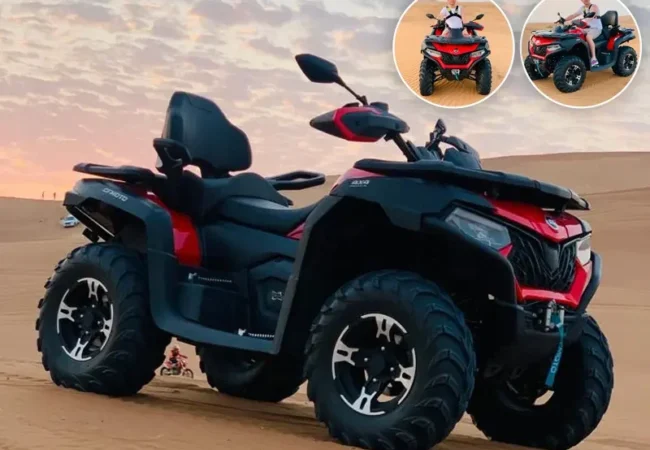
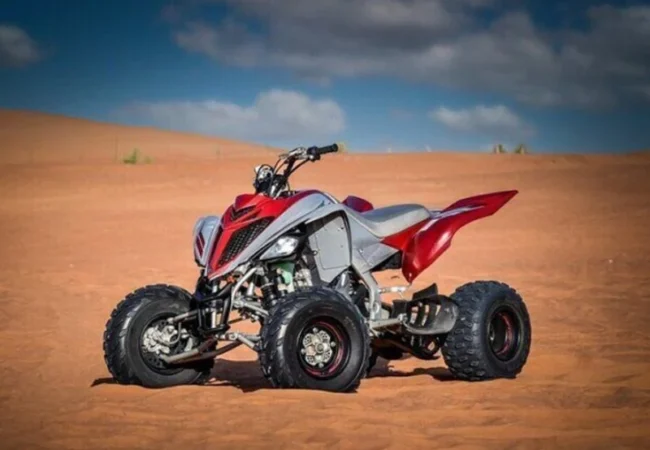
Yamaha Raptor 700cc advanced quad bike in the Dubai desertAED 795

Yamaha Raptor 700cc

  • Advanced
  • Screened
  • Fastest

The fastest thing here on four wheels, and the only quad that comes with a conversation first about what kind of terrain you have actually ridden before. Answer that one honestly.

Book this quad
Quad + safari & BBQ

Add the camp to your ride

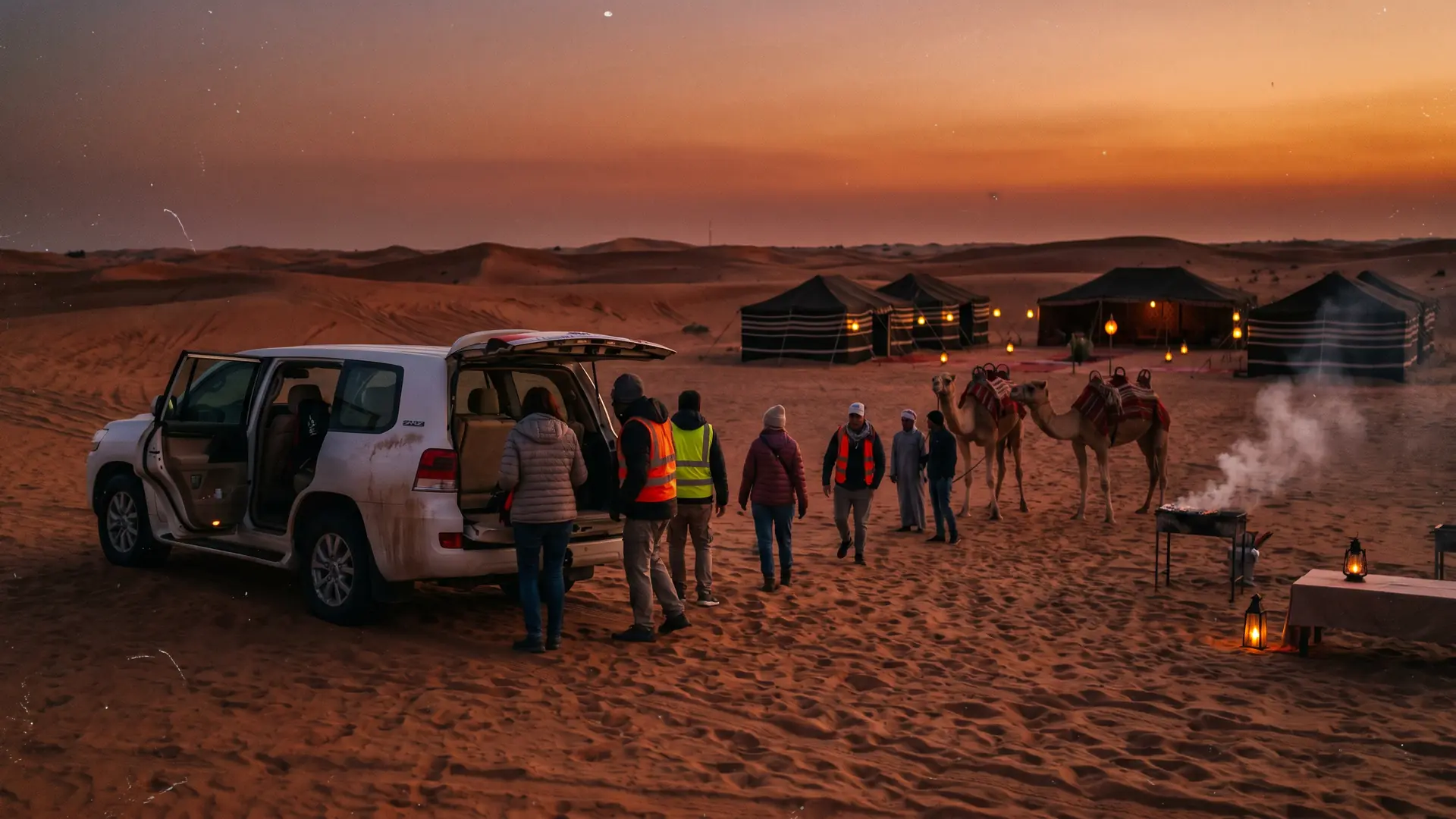
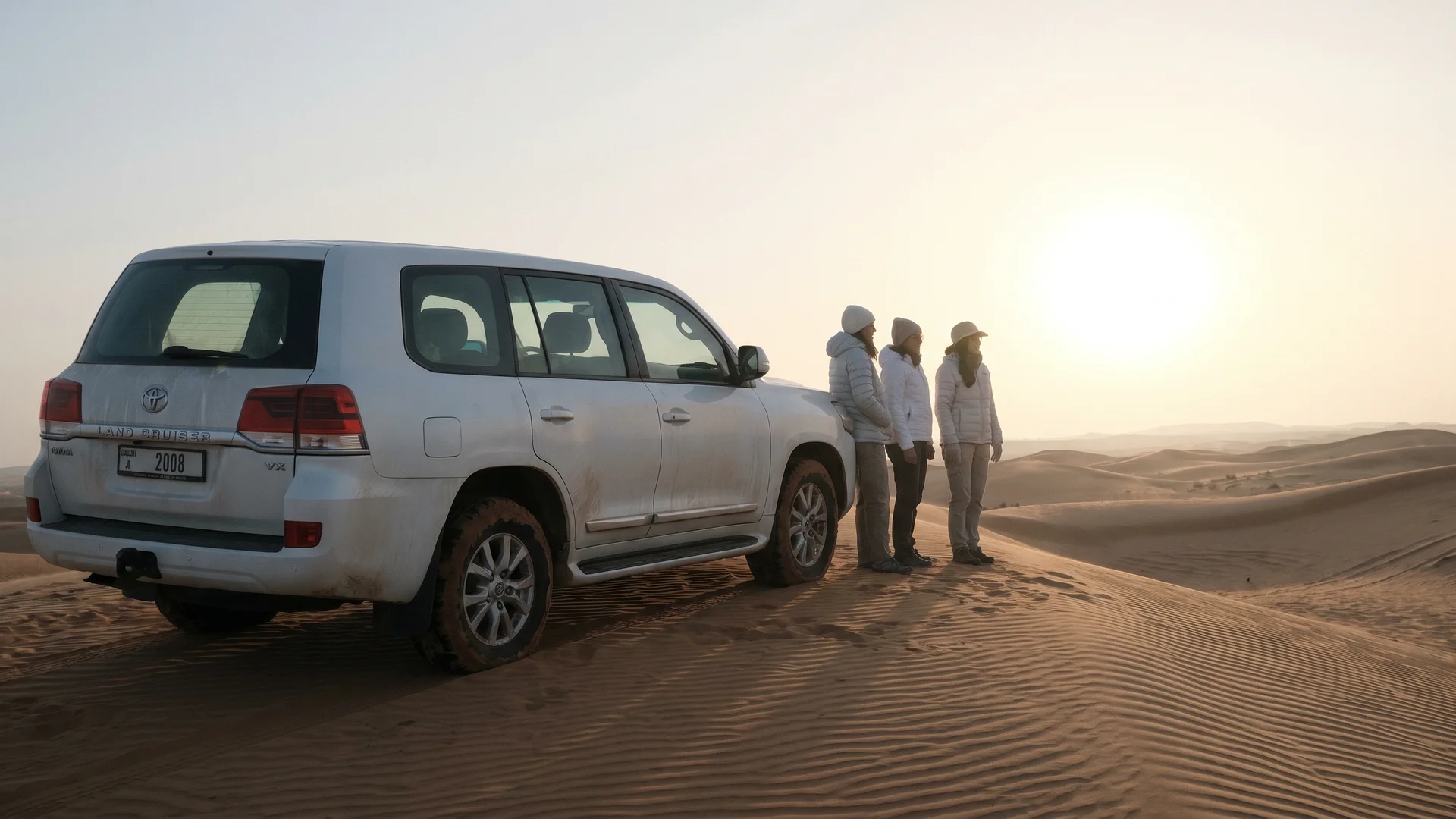
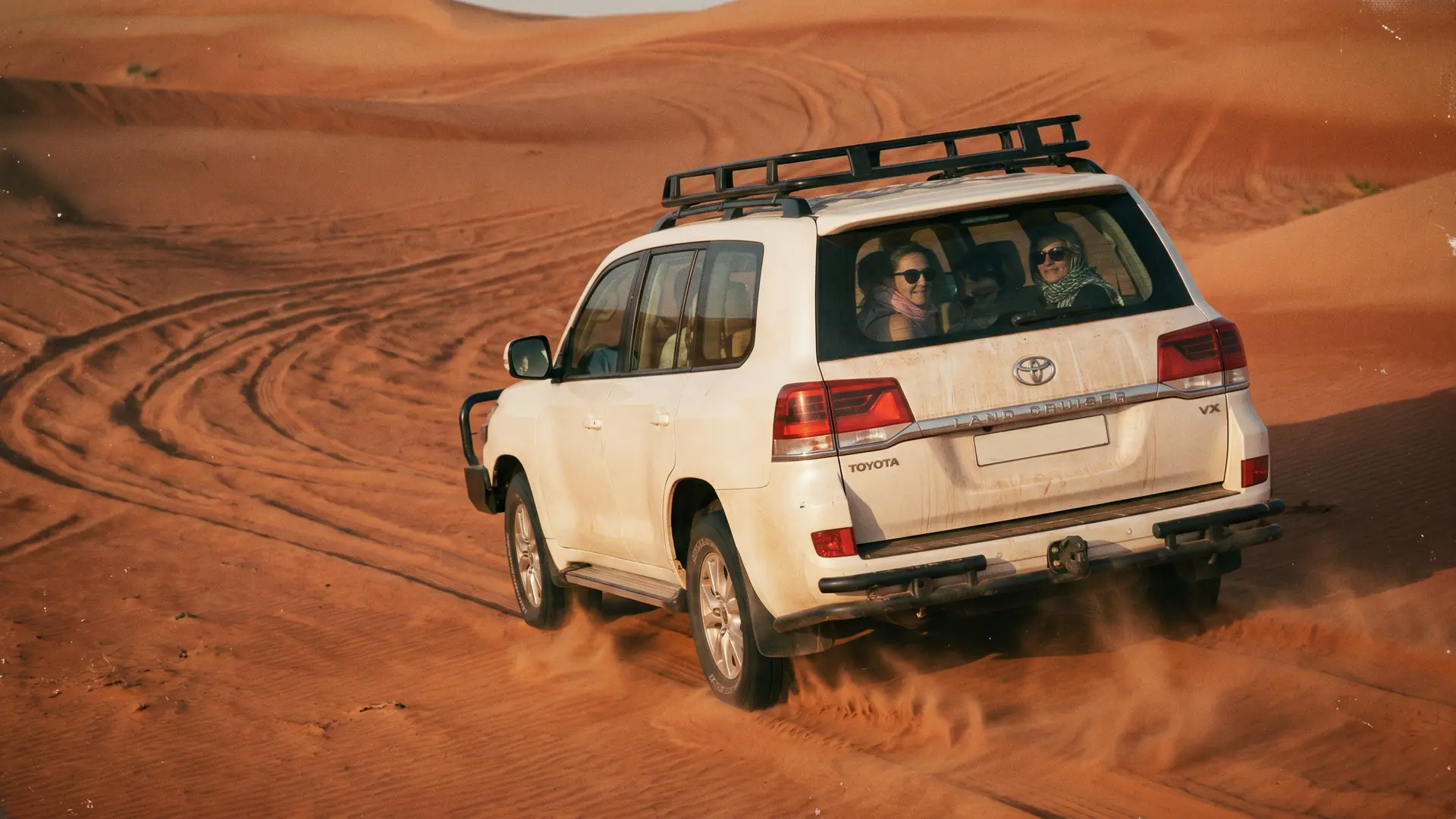
Pair the quad session with a Land Cruiser run across the same bowls, add dinner at the camp, or stack all three into one evening. Either way you end up crossing this terrain twice — once from a driver's seat, once on your own.

Evening desert safari with quad bike ride and BBQ dinner near DubaiAED 375

Evening safari + quad + BBQ

  • Bestseller
  • Dinner
  • Transfers

A Land Cruiser covers the dune bashing while you take a separate quad session over the same bowls, timed so the sand is already cooling by the time your turn comes. Nothing else on this page books out faster.

Book this combo
Morning desert safari combined with a quad bike ride outside DubaiAED 290

Morning safari + quad

  • Early
  • Cooler sand
  • Back by lunch

Overnight cool leaves the sand noticeably firmer at this hour, which makes for an easier climb before the day's heat starts loosening it again. The pick through summer.

Book this combo
Quad bike ride with BBQ dinner package at a Dubai desert campAED 700–1,300

Quad + BBQ dinner

  • No 4x4
  • Dinner
  • Machine choice

A quad session and dinner with no 4x4 dune-bashing leg attached. The price range comes entirely from which machine you choose, never from the meal itself.

Book this combo
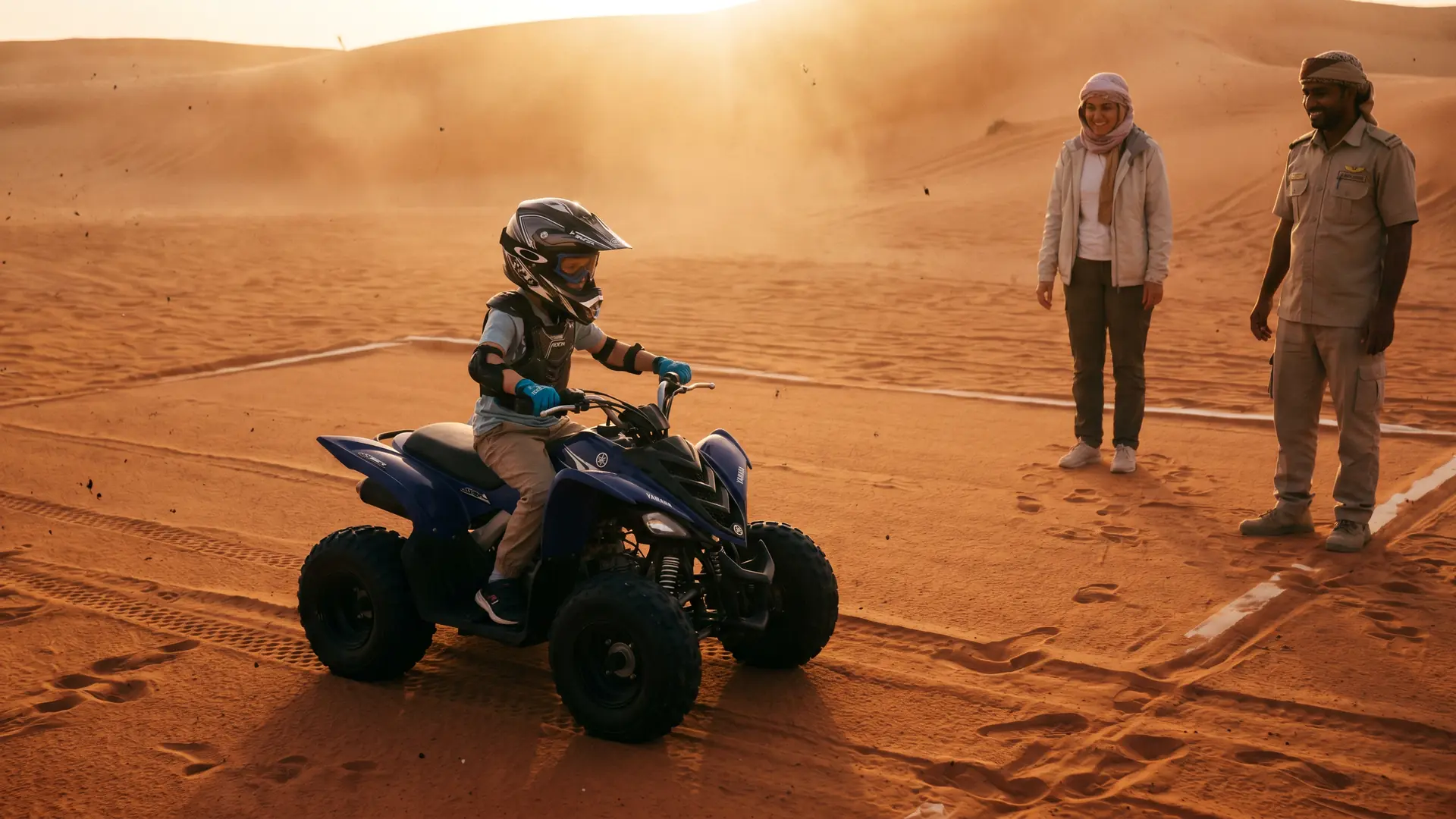
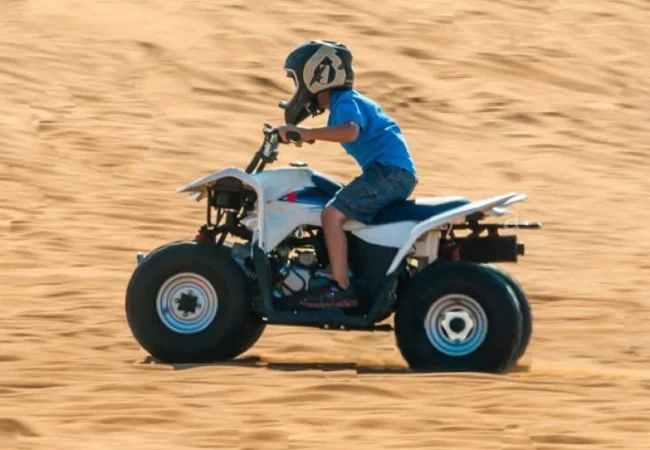
Child riding a supervised 90cc quad bike on a track in the Dubai desertAED 150

Family session

  • Kids track
  • Adults dunes
  • Same site

Kids stick to the 90cc loop's flat, predictable ground while parents take on the real dune bowls a short walk away — one yard, one hour, nobody left sitting in a parked car.

Book a family session
Before you pick

Two things decide which quad you should be on

Have you ridden anything with a throttle?

Cars do not count — motorbikes, jet skis, or anything else where the throttle sat under your right hand and the ground beneath you could shift without much warning.

  • No → the 220cc at AED 200. You will spend the session enjoying it instead of fighting it.
  • A bit → the 400cc at AED 250, which is where most of the fleet moves anyway.
  • Yes, regularly → the 625cc sports quad or the Raptor 700cc, both of which reward proper body position.
  • The turbo 400 is the sensible middle step and costs the same as the double.

Is anyone in your group not riding?

Groups here are rarely made up of riders at the same level, and the terrain has to work for whoever is least confident, not just whoever is keenest to hit the tallest bowl first.

  • Small children → the 90cc supervised track from age nine, or a camel ride from age three.
  • Someone who will not ride → put them on the 400cc double behind a confident rider, or in a safari 4x4.
  • Four adults, one machine each → compare the total against a 4-seater buggy before you book.
  • Pregnancy, back, neck or heart conditions rule out quads entirely. Say so before you pay.
Also on the same dunes

Dune buggies, from AED 599

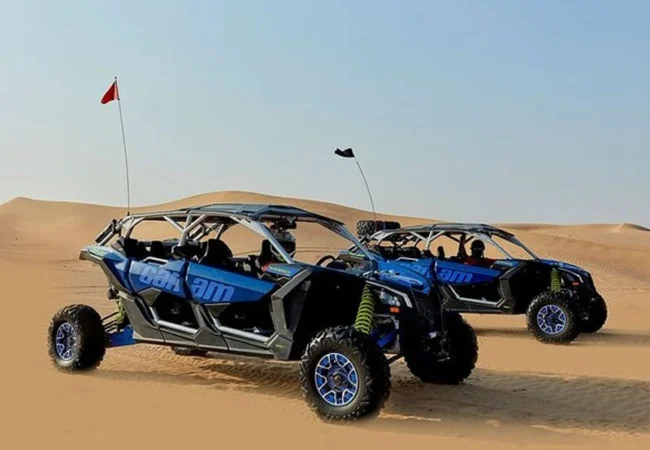
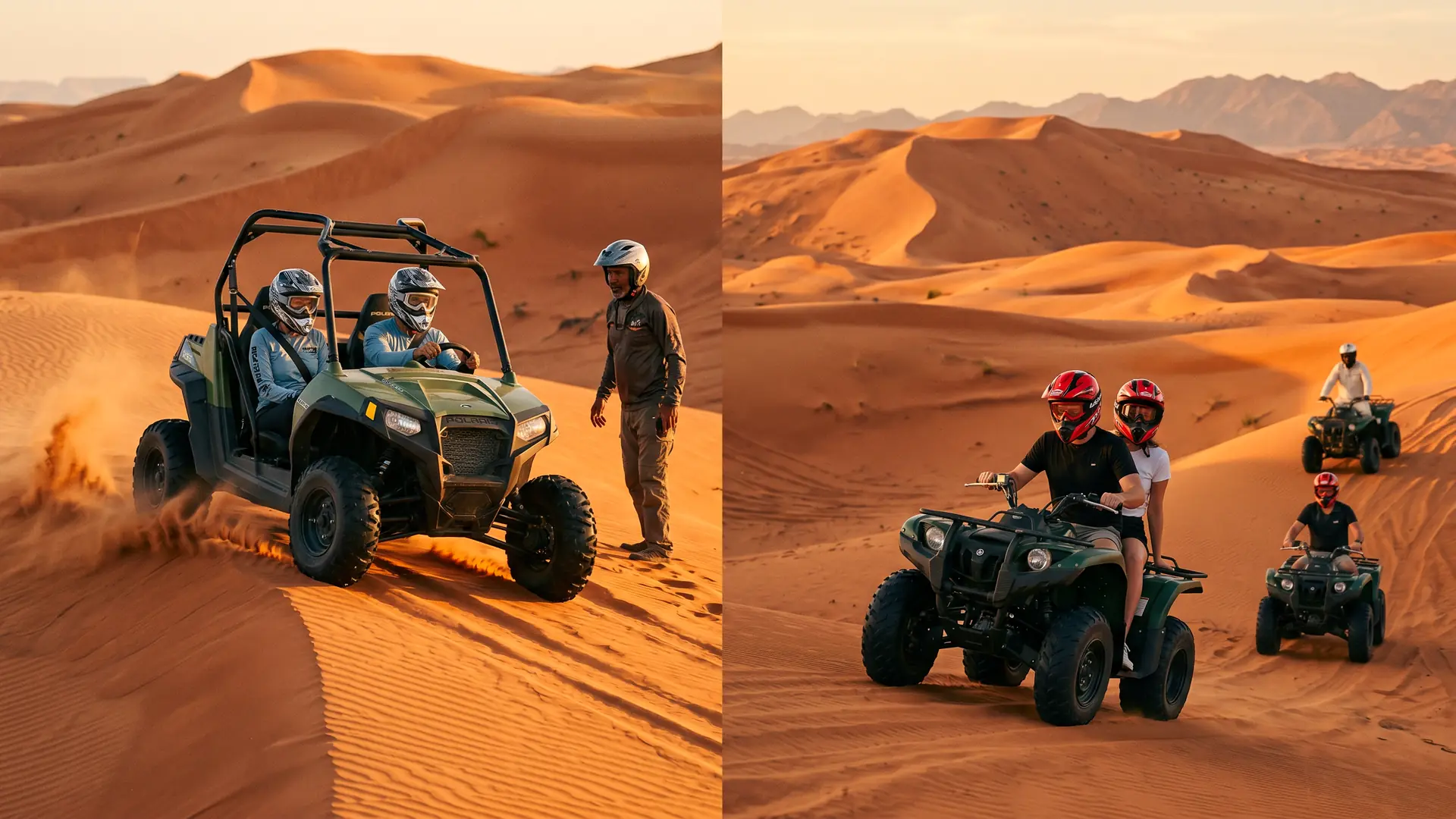
A buggy crosses this same dune terrain from inside a roll cage instead of straddling it — wheel and pedals doing the work that throttle and body weight do on a quad. Trying both back to back on one visit is common enough that it barely counts as an upsell anymore.

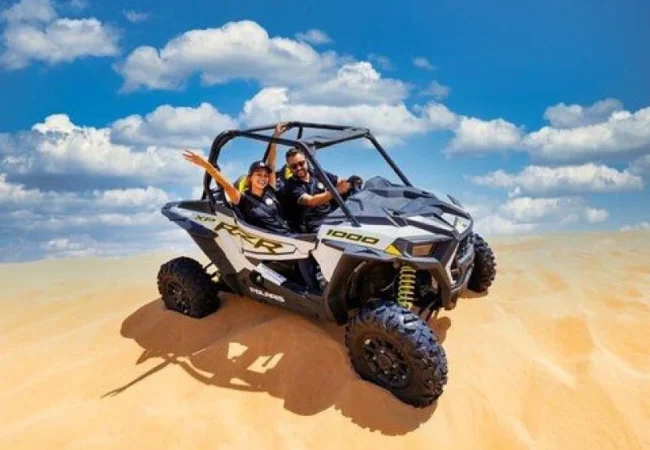
Polaris RZR turbo dune buggy on the Lahbab red dunes near Dubai

Polaris RZR — 2 seater

The starting buggy. Predictable over a soft face, forgiving of a line that goes slightly wrong.

From AED 599Book Now
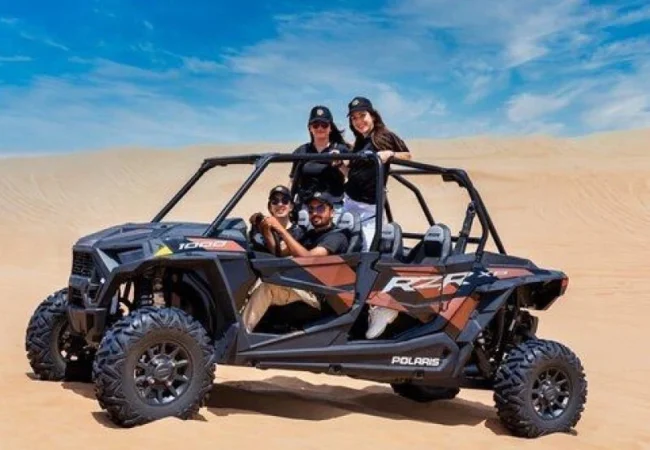
Polaris RZR four-seater family dune buggy in the Dubai desert

Polaris RZR — 4 seater

One driver, four harnesses, one bill — the cheapest way per head to cross the same ground as a group.

AED 800Book Now
Can-Am Maverick X3 desert buggy on red sand outside Dubai

Can-Am Maverick X3

Wider stance, longer suspension travel, noticeably calmer once the ground turns rutted or broken.

AED 999Book Now
Can-Am X3 RS Turbo RR four-seater buggy on a Dubai dune crest

Can-Am X3 RS Turbo RR

200hp. The quickest way to carry four people over a ridge line without slowing down for it.

AED 1,400Book Now
KTM dirt bikes

Two wheels, for riders who already ride

This is the only booking here where riding history gets asked about before anything is confirmed. Balance on two wheels is entirely on the rider, with none of the built-in stability a quad's extra pair of wheels provides on a loose slope.

KTM dirt bike alongside a quad bike on the Dubai desert dunes

KTM 450

AED 850 covers the first hour, AED 1,250 stretches it to two, and both assume you can already read off-road terrain on two wheels.

From AED 850Book Now
Yamaha Raptor quad bike, the four-wheel alternative to a KTM dirt bike in Dubai

Not sure? Take the Raptor

If the KTM answer comes back no, the Raptor 700cc gets you close to the same speed while four wheels handle the balancing that would otherwise be on you.

AED 795Book Now
Desert safaris

When somebody else should drive

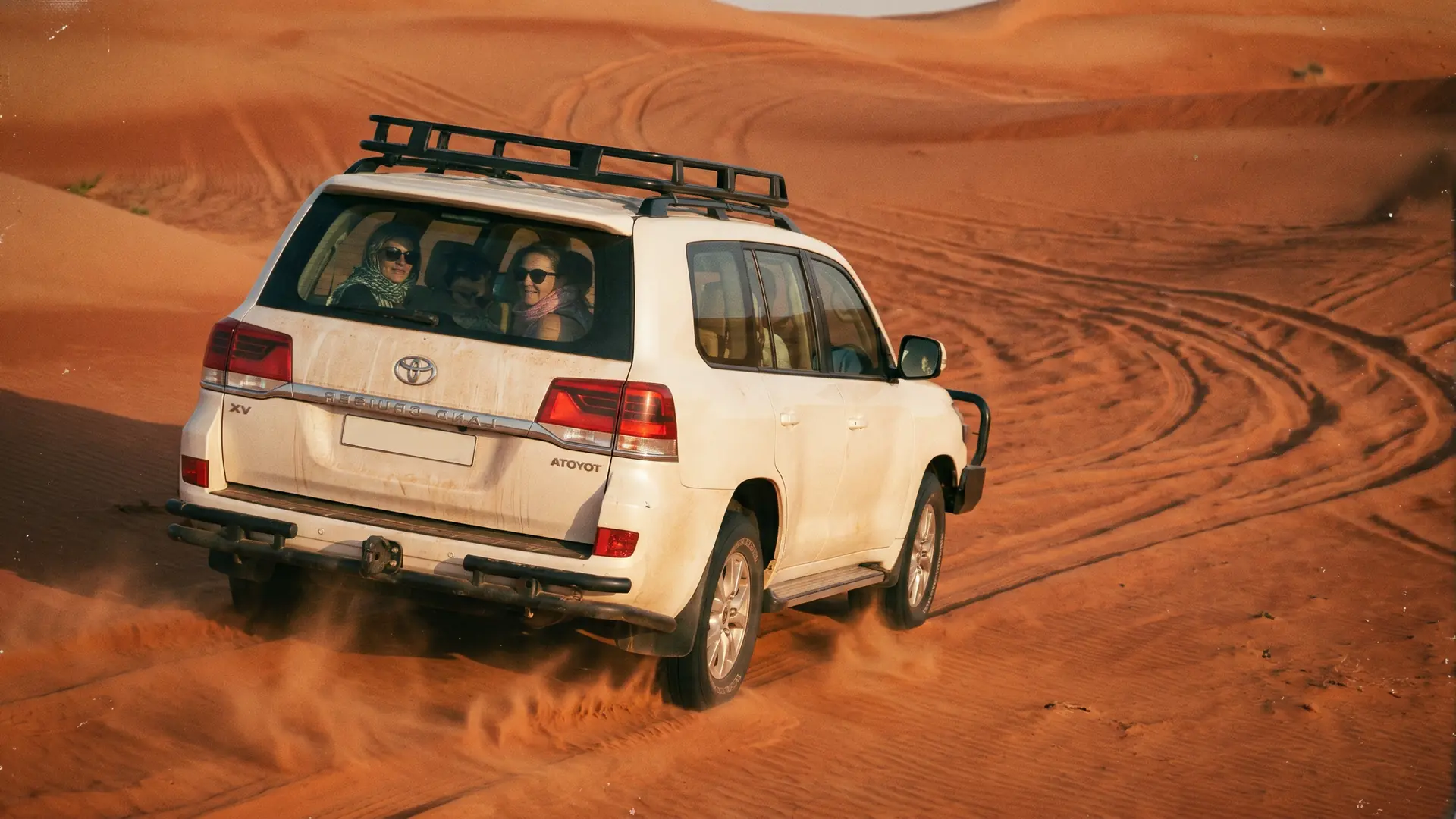
Land Cruiser safaris from AED 225, crossing the same bowls and ridgelines from inside a vehicle built to shrug off whatever the sand is doing that day — a fair option even for someone who booked this page for the quad.

Morning desert safari Land Cruiser on the red dunes near Dubai

Morning desert safari

The overnight firmness is still in the sand when this one leaves, and it wraps up well ahead of the midday heat.

AED 225Book Now
Evening desert safari with halal BBQ dinner at a Dubai desert camp

Evening safari + BBQ

Dune bashing while the light turns gold, a halal spread waiting back at camp, and a driver both directions.

AED 240Book Now
Private morning desert safari Land Cruiser for one group in Dubai

Private morning safari

One vehicle, one guide, and as long as you want on any ridge that catches your eye — nobody else's schedule involved.

AED 799Book Now
Private evening desert safari with dinner at a camp near Dubai

Private evening safari

The same privacy, shifted to sunset, ending with dinner already laid out at camp when you arrive.

AED 1,400Book Now

A handful of options sit off this list by design rather than by accident — sleeping out under the stars, a step-up VIP tier, work outings, larger family bookings, and a route kept to flatter ground for anyone who gets queasy on a proper climb. None of it is fixed until a WhatsApp message describes who is actually coming.

Hot air balloons

The one thing worth a 4:30 AM alarm

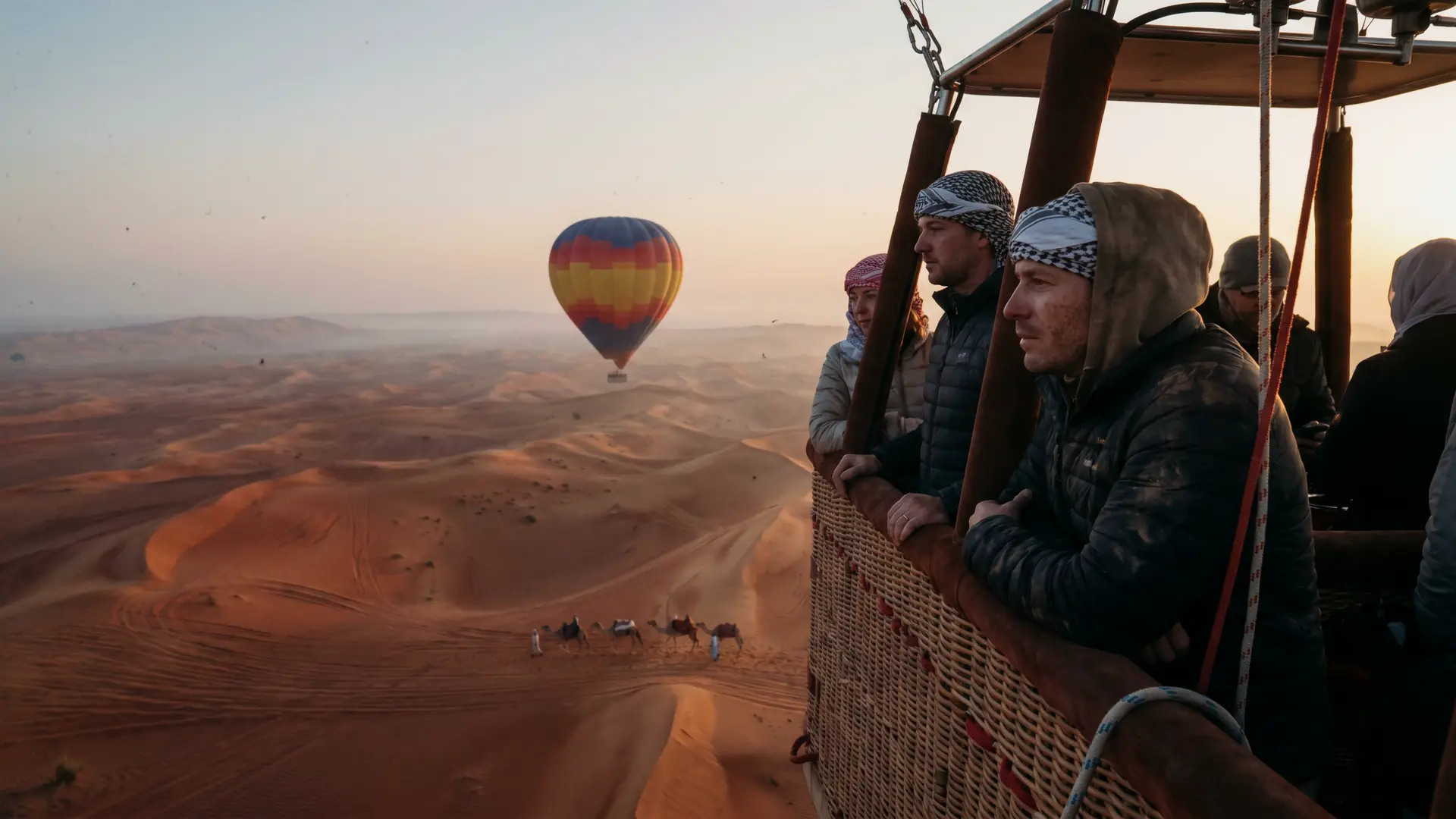
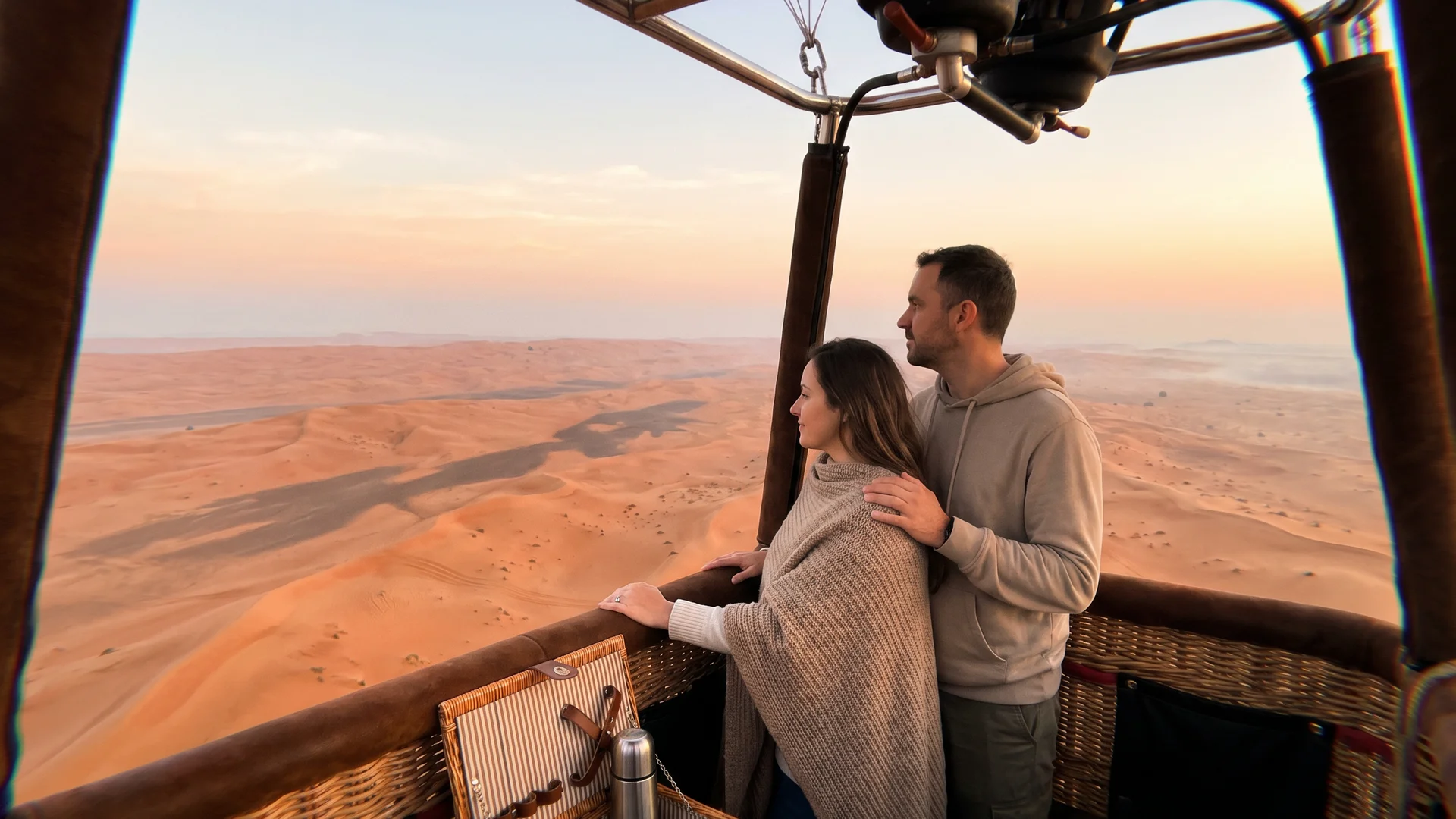
Sunrise flights over the same dune field this page is built around, called off far more readily than a quad session ever would be, since a basket in the air has no tolerance for wind that a machine on the ground barely notices.

Hot air balloon rising over the Dubai desert at sunrise

Sunrise flight

Three tiers to pick from: the base flight at AED 1,049, falconry worked in for AED 1,149, or a full breakfast landing at AED 1,349.

From AED 1,049Book Now
Private hot air balloon charter over the Dubai desert

Private charter

Nobody else in the basket — booked out for a proposal, an anniversary, or a group that wants the whole flight to itself.

From AED 8,000Book Now
Camel and horse riding

For everyone a quad does not suit

For anyone the dune terrain is not the right fit for — too young, too cautious, or just not in the mood for gradient today — a camel or horse crosses the same ground at a pace nobody has to brace for.

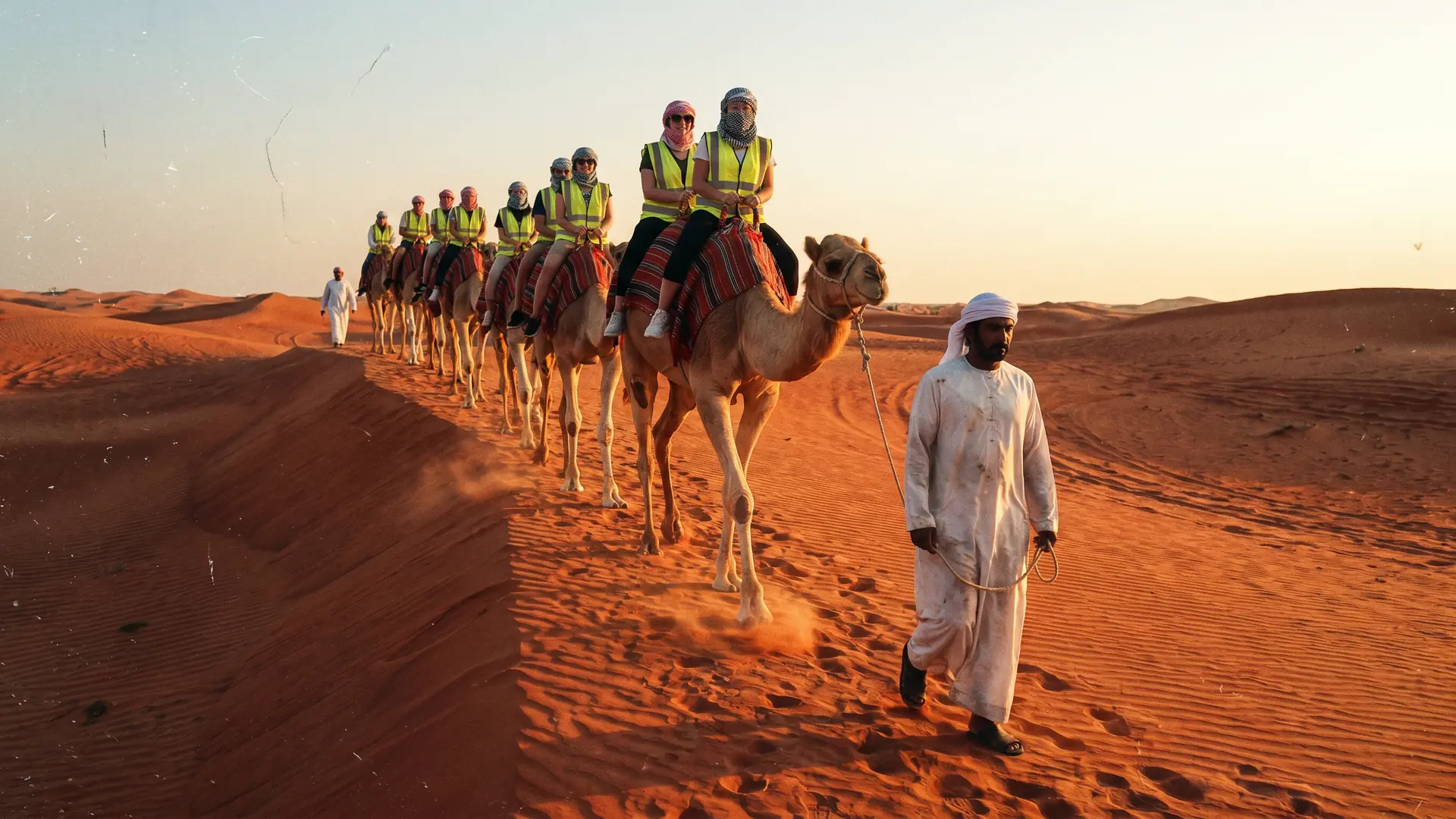
Camel ride across the Lahbab desert dunes near Dubai

Camel ride — Lahbab

A guided trek over the same red sand, ages three and up alongside an adult.

AED 150Book Now
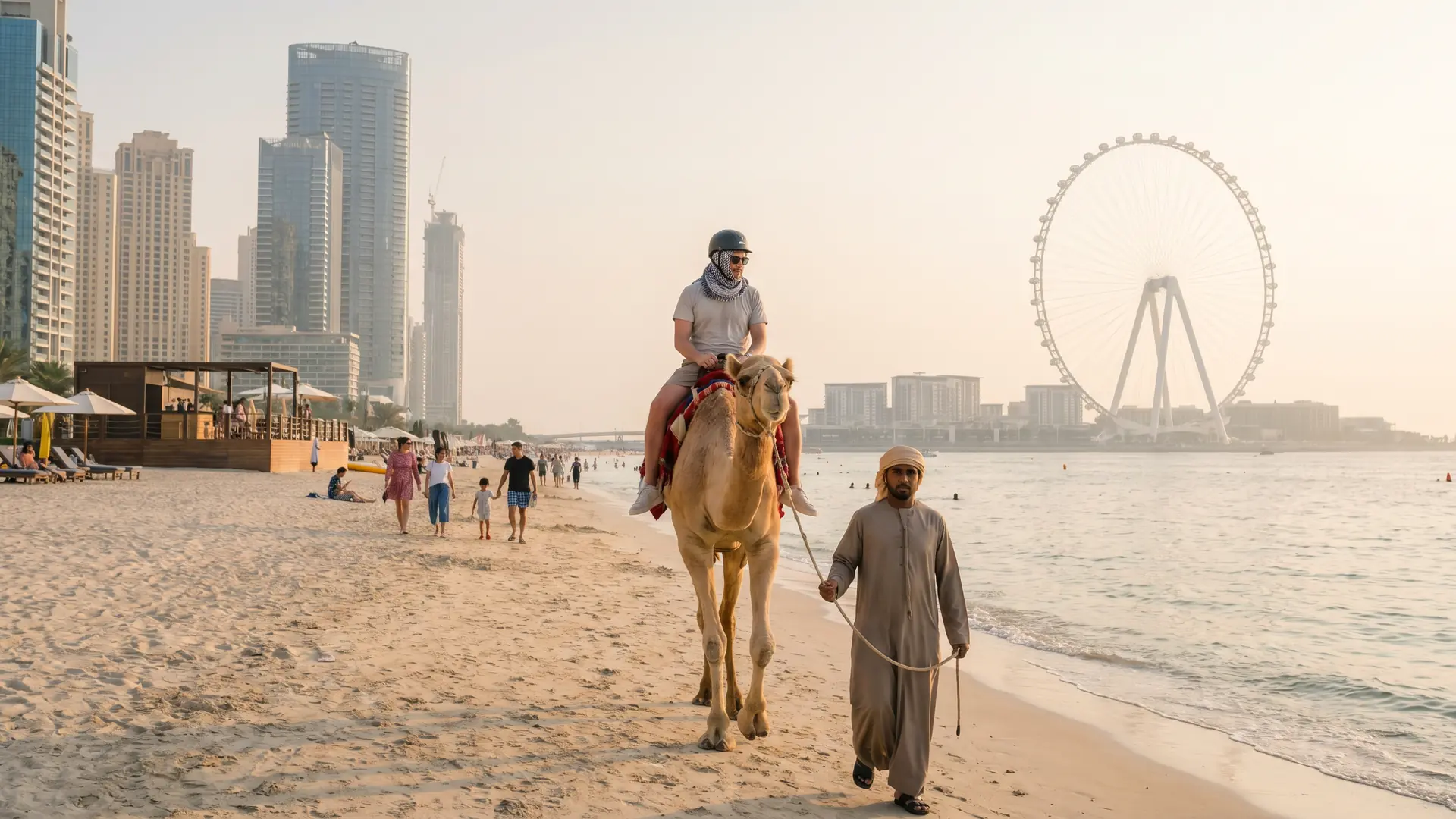
Camel ride along JBR beach in Dubai with the skyline behind

Camel ride — JBR beach

Skip the drive out entirely — this one happens on flat sand at JBR, with the Marina skyline filling the background of every photo.

AED 300Book Now
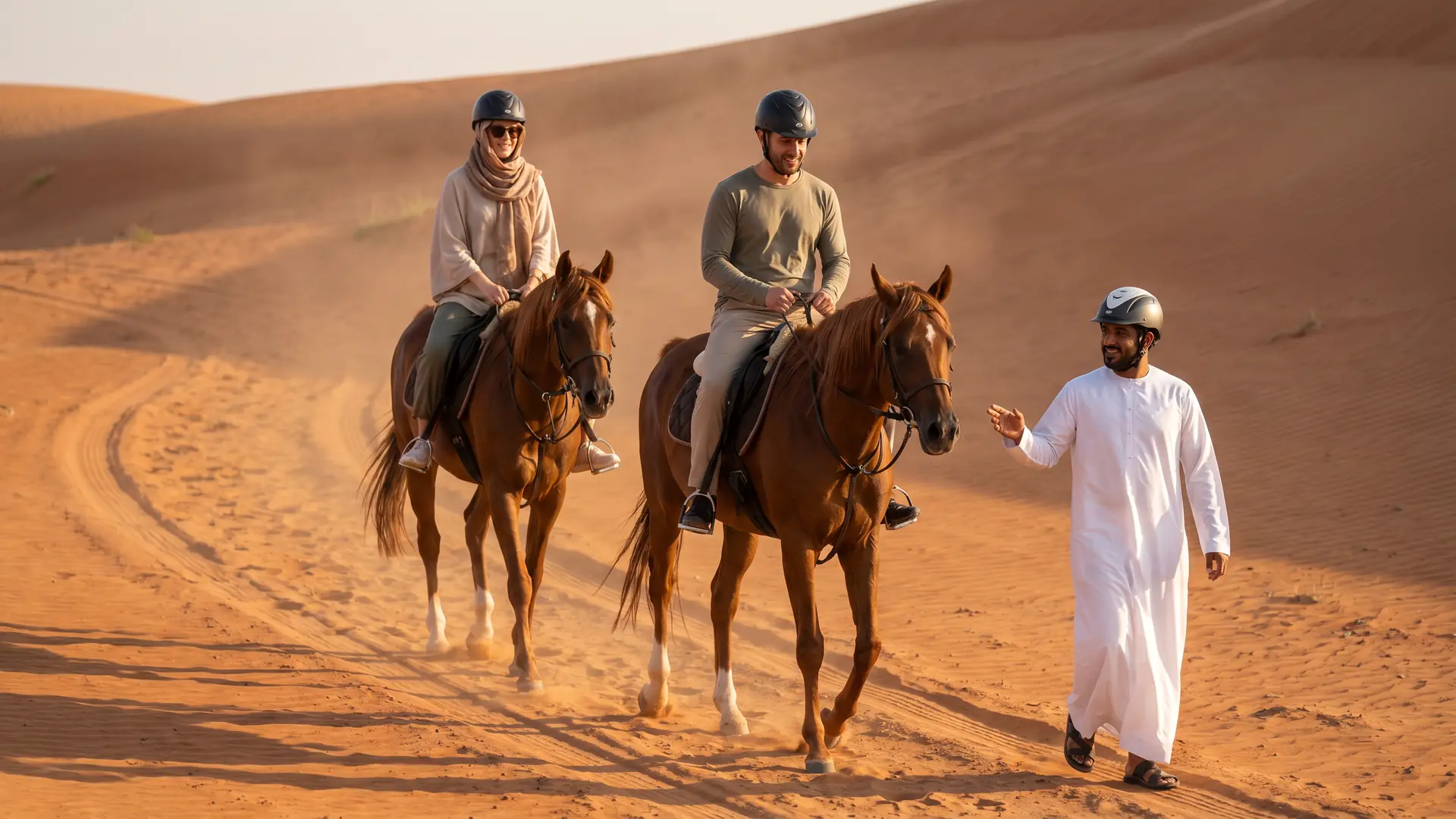
Guided horse riding trail through the desert outside Dubai

Horse riding

A guided trail over firmer desert ground, best suited to riders with some saddle time already.

AED 575Book Now
Combo packages

Build a day out of two or three of these

Nothing here carries a fixed price, because group size, machine choice and how many hours you want on the dunes all move the total in different directions. Describe the day you want and a number comes back the same day it was asked for.

Half-day quad bike and dune buggy adventure in the Dubai desert

Half day: quad + buggy

Quad first, while the ground is still cool and grip comes easiest, buggy second once arms need a rest. Typical total sits somewhere in the AED 290 to AED 1,100 range.

Custom quoteGet a Quote
Family package with quad bike, buggy and camel ride in the Dubai desert

Family three-pack

Quad, buggy and camel spread across one group so every age finds ground that suits them.

Custom quoteGet a Quote
Full adventure day with buggy, quad, safari and BBQ near Dubai

Full adventure day

Quad, buggy, safari and the BBQ camp stacked into one visit, covering the dune field from every angle available. Totals land roughly between AED 700 and AED 2,200.

Custom quoteGet a Quote
Desert safari and hot air balloon combination package in Dubai

Balloon + desert day

Up at first light to see the dune field from above, back on it at ground level once the sun is properly up.

Custom quoteGet a Quote
Where we ride

Al Lahbab's terrain, and how you get out there

Every session on this page launches from the same yard at Al Lahbab, out past the city's edge along the Dubai–Al Ain road. The terrain is what makes the drive worth it — proper dune bowls and ridgelines carrying real gradient, built from a deep iron-red sand that behaves differently underfoot than the flatter, more trafficked ground closer to town.

Nobody gets pointed at a real dune face without a warm-up first, on a stretch of flat, level sand kept clear for exactly that. How you handle the throttle and your own body weight there tells the guide how much gradient to add next, and how quickly — reading each rider against the terrain rather than running everyone through one fixed route.

Pickup

  • Central Dubai hotel pickup available at an extra charge
  • Marina, JBR, Downtown, Business Bay and Deira are routine
  • Self-drive directions sent once your booking is confirmed
  • Abu Dhabi and Sharjah quoted before payment
  • Outer emirates work best as a full-day booking
  • Timing confirmed on WhatsApp the day before

Practical details

  • Drive time: around 45 minutes from Downtown Dubai
  • Best months: October to April in daylight. Summer moves to early morning or late afternoon.
  • Licence: not required, this is private desert land
  • Wear: closed shoes, sunglasses, clothes you do not mind filling with sand
  • Bring: ID, and a strap if you plan to film
  • Book ahead: weekends go first, especially the Raptor
How a session runs

Pickup to drop-off

A short slot and a full afternoon on the dunes both move through the same six steps in the same order. What changes between them is only how long the middle one runs.

  1. 1

    Pickup

    Hotel pickup across central Dubai, or directions sent once your booking is confirmed.

  2. 2

    Briefing

    Helmet on first, then throttle, brakes and body position explained against the actual ground you are about to ride.

  3. 3

    Warm-up

    A flat stretch first, so the guide can see how you read the sand before any real gradient is involved.

  4. 4

    The ride

    From there the guide sets a line through the bowls and up onto the ridges, matched to how the dune faces are holding that day.

  5. 5

    Return

    Water and a breather come first, then a look through the day's photos before moving on to the transfer or the next thing on your booking.

  6. 6

    Camp, if booked

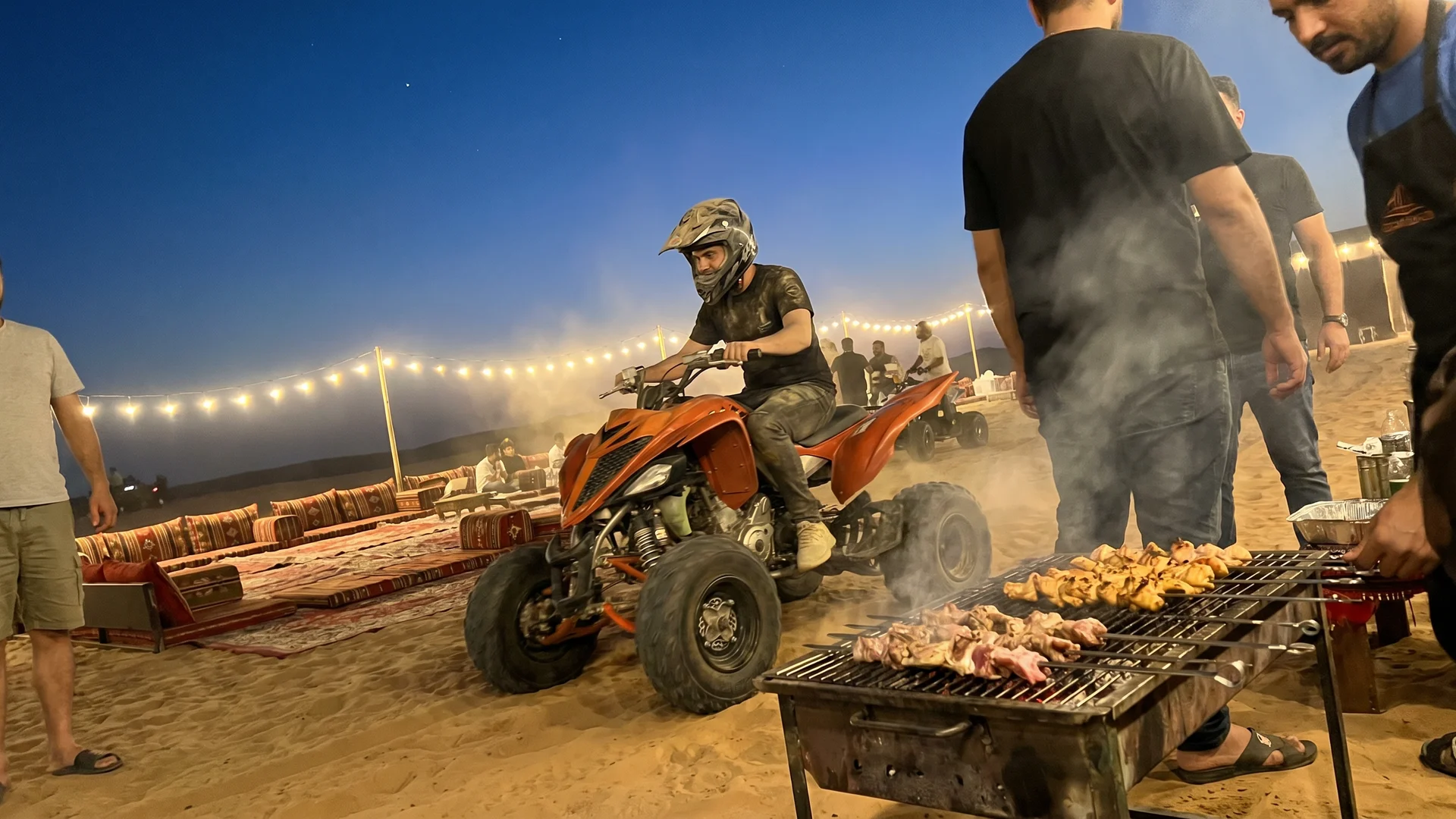
    Anyone on a dinner package carries on from the last dune straight to the camp, where the halal grill is already going by the time you sit down.

Safety and suitability

What is included, and who should not ride

Included with every quad session

  • Helmet
  • Pre-ride controls briefing
  • Fuel for the booked duration
  • Chilled water
  • Machine inspection before handover
  • Lead guide with route control
  • Warm-up check on flat ground
  • Spacing set between riders

Please do not book if

  • You are pregnant
  • You have a serious back, neck or heart condition
  • You have had recent surgery
  • You intend to drink beforehand

A rider's own machine starts at nine years old, and only on the supervised loop with someone responsible standing close by. Below that age, a spot behind an adult on a buggy or a seat on a camel covers it instead. Because how the ground is behaving on a given day genuinely changes the risk, flag anything uncertain about your group when you book rather than waiting until everyone has already gathered for the briefing. Dream Land Adventure Tourism holds the DTCM licence this fleet runs under, though the final call on the sand itself always sits with whichever guide is reading it that day.

What riders say

Recent notes from the dunes

Google

Based on 1,529 Google reviews

“Went with the 400cc on the guide's advice and could actually feel why — the 220cc would have been hard work on the bigger climbs.”

MMarcus Wexford
3 weeks ago

“Rode at 7am and again after lunch on separate trips. Same dune, completely different sand — firmer in the morning, looser and slower by afternoon.”

PPriya Ramesh
1 month ago

“Got the Raptor after a few real questions about my riding background first. Good that they did not just hand it to anyone with a credit card.”

CCallum Doherty
2 months ago

“My daughter did the 90cc loop while I took the dunes properly. She had her own little track, I had actual gradient. Worked out well for both of us.”

FFatima Rahal
5 weeks ago

“Bogged down twice on a loose face and the guide just rode back and sorted it both times. No drama, no charge.”

HHenrik Solberg
6 days ago

“Booked last minute for a Thursday and got in with two days' notice. Weekend slots already looked full when I checked.”

AAmara Okonkwo
2 weeks ago

“Compared this to a spot nearer the city a colleague used. The dunes out here are taller and the sand is a completely different colour.”

KKenji Watanabe
3 months ago

“Evening safari plus quad plus BBQ for AED 375, and none of the three parts felt like an afterthought.”

IIsabela Duarte
1 month ago

“Wind picked up the afternoon before our slot and they moved us to the morning instead. Ended up preferring the earlier time anyway.”

OOwen Fitzgerald
4 months ago

“The warm-up lap felt unnecessary until I saw how differently my quad handled once we actually hit the first real dune.”

NNgozi Chukwu
1 week ago
Tripadvisor

Based on 641 reviews

“Took the 220cc as a first-timer and it was the right call — light enough that a wrong line never turned into a real problem.”

GGrace Sullivan
2 weeks ago

“Machines looked properly maintained, not the tired rental fleet I was half expecting after reading up on cheaper operators first.”

DDiego Fernandez
1 month ago

“Wanted the heavier machine for our longer booking and was honestly told the standard 400 would cover it just fine. Saved us money instead of upselling us.”

AAisha Malik
3 weeks ago

“My brother took the KTM while I stuck to the quad on the same visit. Two completely different rides over the same patch of desert.”

LLars Eriksson
2 months ago

“Sand out here builds into proper bowls, not the flat scrubby patches I remember from a trip years ago closer to the highway.”

CCamila Torres
6 weeks ago

“Halal BBQ afterward was a genuine spread, not the sad buffet table some of the cheaper safari combos serve.”

TTariq Hassan
4 months ago

“Booked the double seat so my husband could ride while I just held on. Turned out to be exactly the right amount of adventure for me.”

BBeatriz Nunes
5 days ago

“Corporate outing for twelve of us, mixed experience levels, and everyone still left with a machine that actually suited them.”

EEmeka Obi
3 months ago

“Guide read the group during the warm-up and quietly sent two of us onto an easier line without making a thing of it.”

YYui Nakamura
1 week ago

“The drive out felt long right up until we actually saw the dunes. Completely different terrain to anything closer to the hotel strip.”

RRadek Novak
2 months ago
Questions people ask first

Quad bike Dubai FAQ

How much is quad biking in Dubai?

A quad is priced per rider, not per group, since only one person sits on most machines. The 220cc is the cheapest adult option at AED 200, the 400cc sits mid-range at AED 250 and pulls in the biggest share of bookings, and the Raptor 700cc sits at the top for AED 795. Children nine to twelve stay on a separate supervised 90cc loop for AED 150. A two-seat 400cc double is the one exception, at AED 350 for both riders.

Do I need a licence to ride a quad in Dubai?

No licence is needed, since every session happens on private desert land at Al Lahbab rather than public roads. What decides how far you go is physical control — throttle discipline and body position — which the guide reads during a warm-up lap before any climb with real consequence gets added to the route.

What is the minimum age?

A rider needs to be at least nine to take a machine of their own, and that is only on the supervised 90cc loop with a guardian standing by. Younger children do not ride solo — riding along in a buggy with an adult driving is the usual substitute, and a camel is open from age three.

Can two people share one quad?

Sharing only works on the Yamaha 400cc double, built with an actual two-up seat, for one combined AED 350 fee. Every other machine in this fleet carries a single rider, full stop — a passenger changes the balance point too much once real dune gradient is involved.

Where do the rides happen?

Everything runs out of Al Lahbab, roughly 45 minutes southeast of Downtown along the Dubai-Al Ain road. That drive is what buys the terrain — deep red dune bowls with genuine height and gradient, rather than the flatter, more worn patches some operators use closer to the highway to save on transfer time.

Is hotel pickup included?

Pickup is not folded into the base price — it gets quoted and confirmed before you pay. Marina, JBR, Downtown, Business Bay and Deira pickups are all routine to arrange. Self-driving works too, with directions sent across once your booking is locked in.

Quad or dune buggy, which should I book?

A quad puts you in direct contact with the terrain — every change in the sand comes through the handlebars, and your own body weight has to answer it. A buggy filters all of that through a wheel, a harness and a roll cage instead. More people than you would expect book one of each in a single visit, then spend the drive home arguing over which one they liked better.

What should I wear?

Shoes that stay on your feet, sunglasses, and nothing you would mind red sand getting into for an hour. Every booking already has a helmet built in. Riders who bring a buff or light scarf tend to be glad of it once the terrain turns loose and grit starts kicking up off the front wheels.

What happens if I get stuck?

Getting bogged down is routine here, not a mishap — a guide simply rides back and gets the machine moving again. It almost always comes from backing off the throttle too early on a loose climb, which lets the wheels sink instead of driving through. Nothing is charged for the recovery.

Is it safe for a complete beginner?

Yes, on the 220cc, and honesty at the briefing matters more than any prior experience. The warm-up happens on flat, even ground first, purely so the guide can see how your hands and weight respond before any real dune gradient gets added. A gentler line gets assigned quietly whenever it is needed, no announcement made.

How long is a session?

The standard rate covers one loop through the dune terrain. Longer routes, multi-machine groups and combo days all get arranged individually rather than fixed to a set clock, and a booking that adds a safari or dinner easily fills most of an evening. Share your group size and timing gets confirmed directly.

Can I add a desert safari or BBQ dinner?

Most riders do exactly that. Add the quad to the evening safari and BBQ and the total comes to AED 375, the single most-booked line on this page. The same pairing in the morning runs AED 290 instead, and skipping the 4x4 dune-bashing leg entirely — just a quad and dinner — settles somewhere between AED 700 and AED 1,300 depending on which machine gets picked.

What if the weather is bad?

A dust haze or strong wind gets a slot rescheduled, never cancelled outright, with fresh options offered before the original time even arrives. Wind is also what reshapes a dune's crest and slip face overnight, so the rebooked route can end up a genuinely different ride from the one first planned.

How far ahead should I book?

A day or two of notice is generally enough midweek. Weekends need closer to a full week, more if the Raptor 700cc or several matching machines for one group are what you are trying to line up. Reserving the slot for real happens the moment payment goes through online.

The complete terrain guide

Desert Quad Biking Dubai: what the terrain at Al Lahbab actually rides like

Quick answer

"Desert" undersells what Al Lahbab's terrain actually does under a quad's wheels — this is a deep, iron-rich red sand that holds firm in ridges some mornings and turns loose and slow by mid-afternoon, and reading that shift is most of what a guide is doing out there. Dune faces range from a gentle roll on the approach slopes to genuinely steep walls on the tallest bowls, close to the angle loose sand can hold before it slides. Eight Yamahas cover that whole range, from a supervised 90cc kids loop at AED 150 to a fully screened Raptor 700cc at AED 795, with the AED 250 400cc carrying enough torque to handle most of the gradient in between without needing textbook technique. AED 375 buys the single most-booked combination on this page — a quad session folded into the Evening Desert Safari with Quad Bike and BBQ, scheduled so the ride lands once the sand is already cooling and firming back up for the night. Secure online advance payment confirms your booking, support available 24/7.

Bestseller

Evening safari + quad + BBQ

A quad session timed for cooling sand, a 4x4 dune-bashing leg, and a halal BBQ once the sun drops.

AED 375
Firmest to handle

Yamaha 220cc

Light and forgiving, easiest to correct while the ground has not fully committed to soft or firm yet.

AED 200
Most booked

Yamaha 400cc

Enough torque to carry a loose face without needing textbook technique underneath it.

AED 250
Full gradient

Raptor 700cc

Screened before handover, and the only quad here that gets asked about riding history first.

AED 795
Flat, marked loop

Yamaha 90cc kids

Kept off the open dune field entirely, on ground that stays predictable on purpose.

AED 150
Caged alternative

Polaris RZR buggy

Same terrain, filtered through a roll cage and a wheel instead of body weight and a throttle.

From AED 599
Two wheels

KTM 450 dirt bike

Zero forgiveness for a bad line, built for riders who already read sand on two wheels elsewhere.

From AED 850
Seen from above

Sunrise balloon flight

The one way to see the dune bowls and ridgelines laid out as a single connected shape.

From AED 1,049

What does the sand at Al Lahbab actually feel like to ride on?

Coarser and heavier than it looks in photos, with a rust-red colour that comes from iron oxide in the grain itself. It sits loose on top of a firmer base layer, so the first few centimetres are what a quad's front wheels actually have to work through.

Al Lahbab's sand carries more iron oxide than the paler sand found along the coast, which is what gives it that deep rust colour rather than the washed-out tan most visitors picture before they arrive. That colour is not just cosmetic — sand with more iron content tends to run slightly coarser and heavier per grain than fine coastal sand, and it holds together in a way powdery sand does not. Under a quad's front wheels, that shows up as a top layer that is genuinely loose, sitting over a firmer base the wheels find once they push down through the first few centimetres of it.

The surface itself is rarely flat for more than a few metres at a stretch. Wind carves the whole area into ripples, some barely noticeable, some large enough to bounce a quad's front end if you catch one at the wrong angle, and it stacks the loose material into crescent-shaped bowls and ridgelines rather than letting it spread out evenly. Riding through one of those bowls means crossing several different textures inside a single minute — a firmer patch on the approach, a soft pocket partway up, a wind-hardened crust along the ridge itself where moving air has compacted the surface more than the sun has.

Riders who have never handled a quad on real dune sand before usually describe the same thing in the first few minutes: the front end wanders slightly even on ground that looks flat, reacting to texture changes too small to see from the saddle but large enough to feel through the handlebars. That feedback turns out to be useful once you get used to reading it — a quad transmits far more of what the ground is doing than a heavier vehicle would, which is part of why the warm-up lap on level sand happens before anyone gets pointed at a dune with real height to it.

How steep do the dunes get, and does a quad handle that differently than flat sand?

Dune faces at Al Lahbab range from a gentle roll on the approach slopes to genuinely steep walls on the tallest bowls, close to the angle loose sand can hold before it slides. A quad climbs and descends those faces on a different set of inputs than it uses on flat ground.

The gentler approach slopes around Al Lahbab roll at an angle you would barely register as a climb, the kind of grade a quad crosses on steady throttle without any change in body position. The steepest dune faces are a different matter entirely — loose sand can only pile up to a certain angle before it starts sliding under its own weight, and the tallest slip faces here sit close to that limit. Guides read each dune before committing a rider to it, because a face that looks similar to the one before it can turn out noticeably steeper once you are actually on it.

Climbing a steep face asks for committed throttle and forward body weight, carrying enough momentum into the base of the climb that the machine does not bog down halfway up — backing off partway is exactly what leaves a quad stuck, covered in more detail on this page's FAQ. Coming back down the same kind of face reverses almost everything: weight shifts back, throttle gets controlled rather than committed, and the machine is allowed to settle into the descent instead of being pushed down it. Flat sand asks for neither of these adjustments — steering inputs behave closer to how they would on any firm surface, and the throttle mostly just sets speed rather than deciding whether the machine keeps moving forward at all.

Ridgelines add a third kind of input on top of climbing and descending: crossing along the top of a dune rather than straight up or down it, often with the ground sloping away to one side. That side-slope, not just the climb itself, is where body position matters most, leaning uphill to keep the machine's weight over the wheels rather than let gravity pull it toward the lower side. None of this is intuitive on a first ride, which is exactly why the route a guide sets on any given day depends on how a rider handled the flat warm-up first.

What riding technique changes on soft sand versus firmer desert ground?

On firm ground a quad tracks close to where you point it, steering the way it would on any solid surface. On soft, loose sand the front end floats and drifts instead, so technique shifts toward momentum, weight distribution and smoother throttle rather than direct steering input.

Lower in the bowls, and especially in the early morning before the day's heat has worked through it, the sand at Al Lahbab compacts into ground that behaves close to how a quad handles on any firm trail. Turn the bars and the front wheels answer in roughly the direction asked for, braking has real bite rather than a long, sliding stop, and holding a straight line takes only occasional, light correction. This is the ground the 220cc is built around, and it is where the warm-up lap for every session happens on purpose.

Climb higher onto a loose dune face and almost everything about that changes. The front wheels push sand rather than gripping it, so turning the bars produces a wide, delayed response instead of a direct one — the machine goes roughly where its weight and momentum are already carrying it, more than where the front wheels are pointed. Riders who keep steering the way they did on firm ground end up fighting the machine on soft sand, wrestling a front end that will not answer the way it just did minutes earlier. The fix is not more steering input, it is less: standing or leaning slightly forward, keeping the throttle smooth and committed rather than jabby, and letting body weight do more of the directional work than the handlebars do.

The hardest technique adjustment is not firm ground or soft ground on their own, it is the transition between them, which can happen within a single wheel rotation where a firm patch gives way to a soft pocket with no visible warning. A rider holding onto firm-ground habits — light steering, casual throttle — gets caught out exactly there, which is why guides spend the warm-up watching how quickly someone adjusts their inputs rather than just how fast they are willing to go. Pick up that adjustment quickly and more terrain gets added to the route; struggle with it and a softer line gets substituted instead, quietly, with no downgrade ever announced.

Does the desert terrain change with the seasons or time of day?

Yes, more than most first-time riders expect. Overnight cooling firms the top layer of sand into a noticeably different surface than the same dune carries by mid-afternoon, and the dunes themselves get reshaped by wind often enough that a route ridden one week is not always identical the next.

Sand that cools overnight sits slightly more compacted the next morning than it does once the day's heat has had several hours to work through it — a small physical shift, but one that changes how a quad's wheels interact with the top few centimetres of ground. Early sessions, including the ones built into the morning safari and quad combo, cross ground that is measurably firmer and more predictable than the same dune faces carry by early afternoon, when the surface has loosened and grip becomes a little harder to find on the steeper climbs. That is a genuine terrain difference, not just a comfort one, which is part of why firmer morning ground suits earlier or less experienced riders particularly well.

Across the year, wind does more to change this terrain than temperature does. A hard blow can shift a ridge crest, deepen a bowl on one side while filling it in on the other, or expose a firmer layer that had been sitting buried under looser sand for weeks. None of that happens on a fixed schedule, which is why guides genuinely do read the dunes fresh each session rather than running a route from memory — a line that worked cleanly last month can carry a different consistency by the time a rider comes back to it.

Evenings bring their own version of the morning effect, with the ground beginning to firm back up again as the heat drops off, one of the reasons the evening safari, quad and BBQ combo consistently outsells a straight midday booking. Strong wind or a dust event does more than reduce visibility — it actively reshapes the terrain a rescheduled session will eventually ride, so a slot moved to the following day is not always crossing the exact route that was originally planned, even on the same stretch of dunes.

Is riding in the desert harder to control than riding on a track or flat ground?

Yes, noticeably. A graded track or a flat car park gives you one consistent surface and a predictable line every lap. Desert terrain changes underneath you within the same ride, adds real elevation, and rarely repeats a corner exactly the same way twice.

A motocross track or a flat practice area is built, not found — graded to a consistent surface, with berms and corners engineered to behave the same way on lap ten as they did on lap one. Desert terrain offers none of that consistency by design. The same short stretch of dune can carry firm ground, a soft pocket and a wind-hardened ridge crest within a few seconds of riding, and none of it is marked or predictable the way a track's painted line would be.

Flat ground and most tracks also remove elevation from the equation almost entirely, which strips out an entire category of control: reading a slope before committing to it, choosing a line across a ridge rather than straight over it, adjusting weight for a climb versus a descent rather than just for a corner. None of that exists on flat terrain, and all of it has to be learned, at least at a basic level, before a quad session out here stops feeling unfamiliar.

This is exactly why nobody gets sent straight onto real dune terrain here — the warm-up check on flat ground exists specifically to test control on a known surface before adding the unknowns a track was never designed to include. It also means the skills genuinely transfer in the other direction: riders who handle a session at Al Lahbab competently are working with a wider range of inputs than a track alone ever asks for, which most people notice the first time they get back on a flat surface afterward and find it feels almost too easy.

What terrain-related safety risks does the desert specifically introduce?

Blind crests, off-camber slopes and sudden shifts from firm ground into soft pockets are the desert-specific risks a flat track simply does not have, and they are exactly what the guide system here — spacing, route control, a mandatory warm-up — is built to manage.

Cresting a dune means riding toward a high point where the far side is not visible until you are already on top of it, unlike a track corner you can see the whole way through before committing. That is why the lead guide sets the line over any ridge first, and why spacing between riders matters more here than someone unfamiliar with dune terrain might expect — closing that gap removes the reaction room a blind crest genuinely requires.

Riding along the side of a dune rather than straight up or down it puts a quad on a slope that pulls sideways as well as down, a real rollover risk if body weight is not shifted uphill to compensate. It is a different kind of hazard than anything a flat track introduces, purely a function of the terrain's shape rather than speed or machine choice, and it is one of the specific things a guide is watching for when deciding how tight a line to set along any given ridge.

The third hazard is the soft-pocket transition covered earlier in this guide: a firm patch giving way to loose sand with no visible warning, which can pitch a rider's weight forward hard enough to matter if the throttle does not ease at the same moment the ground does. None of these risks are reasons to avoid the terrain — they are reasons the whole session is built around a guide reading it in real time rather than a fixed printed route, with the warm-up check, the spacing between riders and the route chosen fresh each session all existing specifically because this ground does not behave the same way twice.

How does Al Lahbab's terrain compare to other desert areas near Dubai, like Al Awir or Big Red?

Al Lahbab carries taller, more consistent dune bowls with genuine gradient. Al Awir sits closer to the city on flatter, more transitional ground with far less height to it, and Big Red is a single, heavily trafficked dune rather than a full field of bowls and ridgelines.

Al Awir sits nearer central Dubai, which makes it the first stretch of open desert some operators use simply because it cuts down on transfer time. The terrain reflects that proximity — flatter, more scrubby, transitional ground between the city's edge and the real dune field further out, without the height or the consistent bowl-and-ridge structure that makes the extra distance to Al Lahbab worth it for a quad session. It is not bad terrain, it is simply a different kind, closer to open sand flats than to dune country proper.

Big Red, out along the Hatta road, is almost the opposite case: a single, very tall dune rather than a spread-out field, and one of the most heavily visited spots in the region for sandboarding and casual dune photos. That popularity has a direct effect on the terrain itself — the surface gets churned by a constant stream of vehicles and visitors, leaving a deep, loose top layer that behaves differently from a dune seeing only a controlled number of guided sessions a day. It is a genuinely different physical challenge, closer to riding through repeatedly disturbed sand than the more settled bowls and gradients found deeper into the desert.

Al Lahbab sits further out than either, which is exactly what buys the terrain riders come here for — deep red dune bowls that hold their shape between sessions rather than getting flattened by constant traffic, with enough elevation change to make the gradient and technique differences covered throughout this guide actually matter. The extra 45 minutes on the drive is, in effect, the price of riding dune country that still behaves like dune country, rather than a well-worn sandpit close to the highway.

People also search for

Guide FAQ

Does the sand at Al Lahbab feel different from other Dubai desert spots?

Yes. The iron-rich red sand here runs coarser and holds its shape in taller bowls and ridgelines, rather than the flatter, more worn ground found closer to the city.

How steep is the steepest dune you might ride?

The tallest slip faces sit close to the angle loose sand can hold before it slides, noticeably steeper than the gentle approach slopes most riders cross first. Guides read each one before committing a rider to it.

Do I need experience to handle soft sand?

No, but the 220cc and 400cc are both built to forgive the wandering front end that soft sand causes, and the warm-up lap exists specifically to judge how quickly you adjust before any real gradient gets added.

Is morning or evening riding better for the terrain?

Both cross firmer ground than a midday session, since overnight cooling compacts the top layer of sand. Morning suits earlier risers and cooler climbs; evening pairs naturally with the sunset safari and BBQ combo.

Does wind actually change the dunes between visits?

It can. A hard blow can reshape a ridge crest or shift a bowl's outline within days, which is why guides read the terrain fresh each session rather than riding a route from memory.

Why does a quad feel bumpier than expected on flat-looking sand?

Wind ripples across the surface are often too small to see from the saddle but large enough to feel through the handlebars, part of what a quad transmits far more directly than a heavier vehicle would.

What is the biggest technique mistake first-timers make on soft sand?

Steering the way they would on firm ground — turning the bars hard instead of easing the throttle and shifting body weight, which is exactly what makes a quad fight back on a loose face.

Are off-camber dune slopes dangerous on a quad?

They introduce a real sideways pull that a flat track never does, which is why leaning uphill on a ridge crossing matters more than speed does. Guides account for this when setting how tight a line to take.

Is Big Red's terrain similar to Al Lahbab's?

Not really. Big Red is one heavily trafficked dune with a deep, churned top layer from constant visitor traffic, while Al Lahbab spreads across a full field of bowls and ridgelines that see far less continuous wear.

Does terrain difficulty affect which machine I should book?

Yes — heavier, more planted machines like the Grizzly 450cc suit longer routes across mixed terrain, while lighter quads like the 220cc are easier to correct on ground that keeps changing underfoot.
Get a quad booked

Pick the machine that matches how you actually want to ride the terrain, pay online to hold your slot, and a WhatsApp message the day before settles exactly where and when pickup happens.